1923
01
The first spark
Model supplier H. P. Jackson placed an advert seeking like-minded York engineers. The first attempt did not take—but the idea stayed warm.
 York ModelEngineersMember login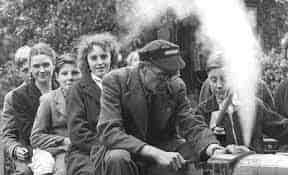
Our story · 1929 to now
A Society carried through borrowed rooms, lost tracks, wartime workshops and sheer persistence to a permanent railway home.
The long read
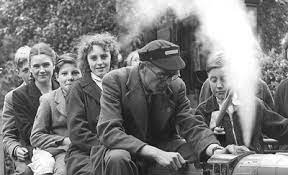
The first club meetings were mostly discussion nights in public houses. But “Live Steam Nights” brought locomotives to a test bed, stationary engines to life—and even a flash-steam boat into action.
What follows is a story of ingenuity under pressure: every time the Society lost a home, its members stored the rails and started again.
Model supplier H. P. Jackson placed an advert seeking like-minded York engineers. The first attempt did not take—but the idea stayed warm.
On 15 September, 36 people met in Micklegate and formed the York City and District Society of Model and Experimental Engineers. ‘Experimental’ was dropped in 1946.
After the war, a raised track was erected at Stockton Lane. Its rails were made by members in LNER workshops; parts still run in today’s Dringhouses track.
Following the loss of Stockton Lane, a circular raised track, exhibitions and open days found a new home at Bishopthorpe. Membership grew to around 50.
Builder Jack Birch offered land at Moor Lane. Over 18 years members added a station, roofed steaming bay and a track familiar to observant East Coast passengers.
The Society took possession of former railway sidings at Dringhouses after purchasing the land from British Rail. A clubhouse and track rose from ground deep in NER and LNER ash.
Nearly a century after that Micklegate meeting, new generations keep building, teaching and running—on land connected to York railways since Victorian times.
From the archive
A six-page account copied from the notebook of a founding member, recording the Society’s workshops, tracks, setbacks and survival in remarkable detail.
Read the original PDFThe railway runs on steel.
The Society runs on people.